The concoction of the perfect cup of coffee is nothing short of cerebral. Between balancing chemicals, temperatures and water levels, the best baristas must be dilligent throughout the entire preparation process. The science behind the ideal brew starts with the raw bean, grown on a distant farm, and doesn't end until the first sip - a process much more intricate than it may seem.
By: Kimberly Alters, Roshan Nebhrajani, Shelly Tan, Lisa Xia


The mad scientists behind these caffeinated creations - mad baristas, if you will - need to work with quality ingredients to perfect their product. In this case, it all starts with the raw coffee beans.
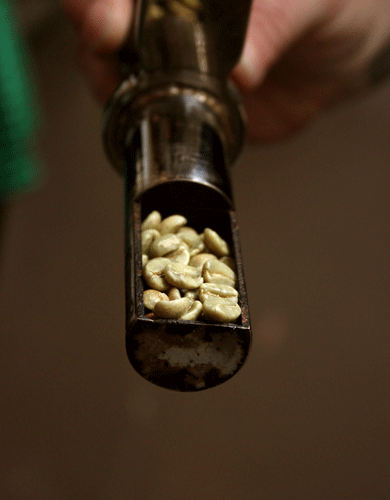
So, how can you assess the quality of a bean? Ultimately, you're looking for beans that are clean, well-processed and picked at the height of ripeness, says James McLaughlin, director of green coffee at Intelligentsia Roasting Works, located in Chicago's Near West Side. The highest quality beans available for specialty coffee roasters are single origin beans, McLaughlin says, citing the Geisha bean, which sells for $80 per pound. Nonetheless, many specialty roasters still use blender-quality beans like the Canopy, which tend to be more approachable - especially for non-coffee geeks who would rather not associate their morning cup with terms like "acidic" or "fruity."
But the quest for a good bean goes beyond quality. You're also looking for farmers that are invested in the land and the people working for them, says Chris Kornman, Intelligentsia's quality control expert. "Investment in the environment, investment in sustainable working practices, investment in the communities - those are the kind of people that I really love working with," he says. "They have a really broad, large picture of what it means to be a coffee farmer."
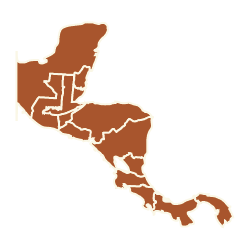
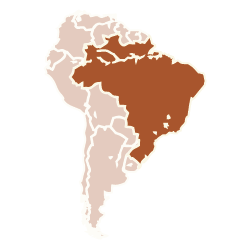
Once you've picked your preferred beans, you can classify them according to geographical region of origin. The trick, however, is that each region's particular flavor profile is influenced more by its processing method than the variety or location of beans within the region, Korman says.
Click regions for more info



The roasting of green coffee beans is the first step in creating the perfect coffee flavor.
The end-goal of roasting varies with each individual bean type because beans grown in different regions and under different conditions come to the roaster with certain inherent flavors. There are, however, several tactics that can be employed during the process to extract specific flavors.
As the master roaster at Bow Truss Roasting Works in Chicago, Dennis Jackson roasts about 15 batches of coffee per day. He uses what is called a drum roaster, in which green beans are dumped and then rotated inside the drum using a series of paddles. The first step, he says, is heating the drum. "It's like pre-heating an oven - you never want to start with a cold drum. That will actually spur some chemical reactions that you don't want."
Once the drum is at the appropriate temperature, Jackson drops the beans inside. Immediately, the drum starts rotating, keeping the beans moving and triggering airflow. Because the roasting process is incredibly precise, Jackson uses the built-in timer and thermometer on his Probat-brand roaster to measure his pace and heat. "There's conductive heat and convective heat," he says. "Right now, the coffee is absorbing the heat."
Jackson says the coffee still has about 9 percent moisture and will continue absorbing heat throughout its first minute of roasting. The temperature inside the roaster, initially at around 420 degrees Fahrenheit, drops as a result. "If the beans absorb the heat too fast, the outside of the coffee can actually be compromised," he says. "The inside of the coffee will still be hard."
Once the temperature inside the drum drops below 165 degrees, the chemical reactions, for the most part, cease. The coffee is still absorbing some heat and gently releasing some moisture, Jackson says. At this point, he increases the airflow to fan the flame inside the drum and once again increase the internal temperature.
"I can do a lot with the air and the flame," he says. "I can build body with the air. I can take body out of it. I can build acidity or I can take acidity out. I can build sweetness. All that stuff plays into [the flavor of the coffee]."
As the roast continues, the beans turn a bit opaque. Jackson says this is a sign that they're taking on heat well. The next step is evaluating the aroma from the beans; at this first stage, there is a "vegetal, green pea-type of smell," he says. He continues to increase the temperature until the drum reaches 270 degrees Fahrenheit, the point at which all of the coffee's free moisture - the moisture outside of the cell itself - is gone, and the beans start to tan in color.
The next step is what Jackson refers to as "the golden point." At this stage, the roasting beans smell a bit more like baking bread. To prevent them from burning, Jackson increases the airflow and keeps the beans circulating within the drum. He then cuts the flame completely, throwing the beans into an exothermic condition, which means they have their own heat energy. Carbon dioxide is released, and Jackson says it is important to keep the roast moving at this point so that it doesn't stifle the roast.
"Right now, you can smell some of the acidity, but you also smell the sweetness. I'm trying to develop the sugars. The sugars are browning," he says. "I don't want to go too fast, so I slow the roast down [by increasing airflow and turning the flame off]."
Because the roast is now an exothermic process, the beans will keep cooking despite the lack of flame, Jackson says. The last step is to increase the airflow just slightly to eliminate any smokey flavor and develop the body, he says. He then lets the beans out of the roaster to cool.
While the roasting process is very holistic in its effect on the taste of the beans, certain aspects can manipulate certain taste profiles. For example, if the flame is too high inside the roaster, the outside of the bean will char, resulting in a burnt, bitter flavor, Jackson says.
Additionally, dramatically increasing airflow could completely remove the acidic notes from the beans. "If you've got a ton of airflow moving through the coffee, it literally knocks [the flavors] off and what you have is a bland, flat coffee. It also knocks out some of the body just because there's too much momentum and the coffee never gets a chance to really roast. It's more baked, if that makes sense," he says.
The roasting process is very much a product of time, patience and developed expertise. "Drum roasters take a long time to learn because there are so many aspects that you can manipulate to get the things you want out of the coffee," Jackson says. "Air manipulation, flame manipulation, your time - it all plays into what you want to do with the coffee."
The Roast Levels
The beans progress through various roast levels during the process, Jackson says. While some are generally more popular, several options exist for the discerning drinker.
Cinnamon Roast
"There's cinnamon roast, which is very light. Cinnamon roast isn't used very commonly. It was used back in the late 1800s, early 1900s when they began canning coffee for major production. It's too sour really, there's not much flavor. So they took lower grown coffee, just roasted them very quickly, and made a lot of money."
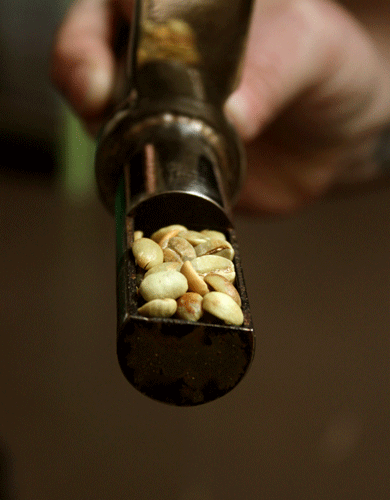
City, City-Plus and Full City
"Then after cinnamon...once it's past first-crack, it's called city. Then there's city-plus, which is just a little bit in[after] first-crack. Full city goes into second crack."
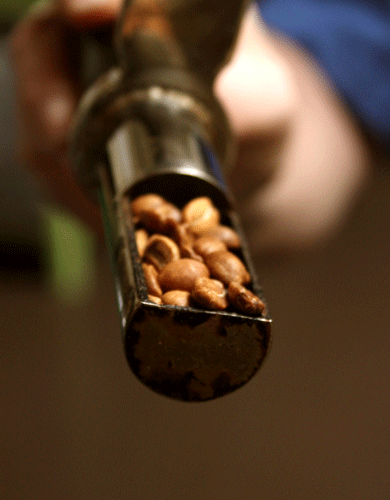
The Dark Roasts
"Vienna roast is just past second-crack. Then [comes] French, then I believe there's one past there called Italian, which is just burnt. It's burnt. It's very bitter."

Baristas call finding the perfect spot or grind setting "dialing in," but be careful turning that dial: Grind fineness greatly influences your brew.
"It affects however much flavor you can taste and what there is to taste, either positive or negative," says Jeffery Batchelder, a barista trainer at Intelligentsia. Adjusting your grind setting will also affect how the coffee extracts, i.e., what percentage of the grounds are dissolved in water. "There's a small window that you want to aim for when you're extracting, and that's between 18 and 22 percent of the coffee dissolving," Batchelder says. "If it tastes sour, you haven't hit that 18 percent yet. If it tastes really bitter, or really savory and astringent, you probably went over 22 percent." The ideal, he says, is when the flavor is delicately balanced. "Whenever it tastes sour, but kind of sweet, and also [has] a little bit of bitterness to round everything out - that's probably right in the mark."
Batchelder says "dialing in" is an arbitrary art, especially because the grind setting options change with every machine. Because there are no universal metrics for each grind, it can be difficult to determine grind setting.
The best tool to use in choosing a grind setting, then, is simply expertise. "I look at it and I feel it. I can tell by feeling it - where I need to go, whether [it needs to be] coarser or finer," says Brian Frain, premier barista trainer and wholesale operations manager at Bow Truss, which is nestled in Chicago's Lakeview neighborhood. "It's really hard to tell someone: 'Oh, just use medium grind,' so I'll usually send them home with a grind sample," he says. "I don't know what their grinder looks like, I don't know how many settings it has, so I'll say, 'This is what it should look like.'"
Frain's best piece of advice to new brewers is to literally lay their grinds out in a spectrum. He tells customers to get a blank piece of paper and trail out the sample he gives them. Then, they can grind their coffee, put it next to the sample on the piece of paper and compare the two. "I know that's not an exact science," Frain says, "but that's really what we do."
Ultimately, the easiest way to think of grind settings is in terms of the amount of coffee you want to brew, Frain says. If you're brewing less, then you'll want a little finer grind. But if you're brewing more, a slightly coarser setting works best.

Espresso
The Espresso grind setting sits just two notches below the finest grind: Turkish. Naturally, this setting would be for users of a stovetop Espresso maker.

Fine
If the close-to-finest grind goes for a 1.25-1.75 oz espresso, then the average "fine" grind suits a small 8-oz coffee.

Medium
Generally, medium grind coffees work well with a Mr. Coffee at home, as well as a pour-over or ChemEx brewing method.

Coarse
Finally, a coarser grind works well with a French press. Because there's so much more coffee and the filter is so much bigger, you have to grind the coffee a little bit coarser. Otherwise it'll overflow the basket.

Temperature and dosage both affect your beverage's depth of flavor.
Temperature
"The temperature of water used to brew coffee using the pour-over method can affect the beverage's depth of flavor," says Dr. Shelby Hatch, a lecturer in the chemistry department at Northwestern University. "Water that is too cold might not extract enough of the beans' intricacies when it is poured over. Chemical reactions take place very slowly at cold temperactures, and extraction is a chemical process," she says. "If something isn't very soluble in cold water, it won't get extracted into [the coffee]."
Hatch, who conducted extensive research on the chemistry of coffee brewing, worked with a student research assistant to test various variables. The student's notes confirmed Hatch's hypotheses. "If you look at her notes, you'll see that as the temperature goes down, you're not able to really extract much of the compounds into the water. Caffeine is really soluble in water, so it's easy to extract that, but some of the other compounds are not [present]," she says. "If you don't have the water hot enough, you're going to get a more bitter tasting coffee because you're just going to be pulling out the caffeine, not the oils and other things that are less soluble in water."
Conversely, water that is too hot might ruin any delicate flavors in the coffee that were developed through the roasting and grinding process. "You don't want to use boiling water because it will extract flavors you don't want," Hatch says. For the Chemex method, she uses water that is heated to 94.6 degrees Fahrenheit.
Dosage
The dosage of water in coffee is an integral factor in the brewing process. Dosage refers to the ratio of coffee grinds to water, most often and most accurately measured during the pour-over method by placing the container directly onto a scale. Brian Frain of Bow Truss says he alters his dosage based on both the portion size of the coffee and the coffee bean itself. "My base spec for a 12-ounce cup of coffee is 28 grams of coffee, and we pour to a total of 415 grams of water weight," Frain says. "For an 8-ounce cup, it's 19 or 20 grams of coffee for 295 grams of water."
6% coffee
94% water

There are more than twenty different ways to transform ground coffee into a deliciously drinkable cup of joe.
Some methods, like a pour-over, use a filter to siphon out oils and residual grind from the brewed cup, while using a French press involves saturating the grinds directly with boiling water without a filter. Because grinds can pass through, this often results in a rougher texture, but some argue this actually makes for a stronger and bolder cup of coffee.
Whether to use a filter depends both on your brew method and overall personal preference for the texture of your drink. "In brewing a cup of coffee, you have a set of variables," Frain says. "My job is to eliminate every single problem that I can [so that] I'm left with a hopefully perfect cup of coffee," he says. The pour-over method is the easiest and most common method for manually brewing coffee, as it only requires either a V60 dripper (for a single cup) or a Chemex. A V60 dripper is a portable cone-shaped device with a small hole on the bottom through which the coffee drips, and it can be placed directly on top of a mug for easy preparation. A Chemex, on the other hand, is a larger flask with a cone-shaped top and a rounded bottom. A filter is placed inside the cone on top of the flask, and the coffee drips directly into the bottom half of the container.
After you've chosen your preferred method and acquired a filter, the next step is to fill a kettle with boiling water. The kettle must have a long and narrow spout to ensure precise and controlled pouring - a key factor in coffee preparation, as even saturation of the grinds is crucial.
There are three main steps to the pour-over process:
Step One: Wet the filter
Completely saturate the paper filter using boiling water, to the point that the filter sticks to the edges of the cone. The water will drip into the container, pre-heating it, while simultaneously eliminating any paper taste from the filter that would otherwise contaminate the coffee's flavor. Once you've done that, pour out the residual water left in the cup. If you don't do this, your dosage ratio will be thrown off and your taste slightly diluted.
Step Two: Pre-Infusion
This step, also called "blooming," lasts about one minute but is crucial to proper preparation. First, pour the freshly ground coffee into the wet filter, then slowly and evenly pour the water over the coffee to completely saturate the grounds. The coffee will begin to bubble - the result of carbon dioxide gas escaping from the grounds. This carbon dioxide was created during the roasting process, so the fresher the roast, the more carbon dioxide will be released.
Step Three: Spiral pouring
Once you've released the carbon dioxide from the grinds (so they've stopped bubbling), slowly pour water over the grounds in a circular motion. As the water drips through the beans and into the flask below, the bed of brewed coffee will continue to fall. Continue to pour in a spiral motion, maintain a consistent height of liquid within the filter. As the water extracts from the coffee, the grinds left in the filter should be an inverted cone shape - this is the tell-tale sign that you've extracted evenly.

To fully appreciate the complexities of the flavors in the final product, slurp it.
While it's not graceful, it is effective. Grab a spoon and scoop up bit of liquid. Using circular breathing, which allows you to breathe through your nose and mouth simultaneously, try to smell and taste the coffee at the same time. "I'm pulling in all of the flavor nodes from this coffee," Frain says.
Of course, if you're just trying to have a casual sip and get your required caffeine buzz, you can just sip the coffee normally. Keep in mind that the volatile compounds in the cup will keep reacting with the oxygen, which alters the taste of the coffee as it cools, so best practice is to drink up within 20 minutes of brewing your coffee.